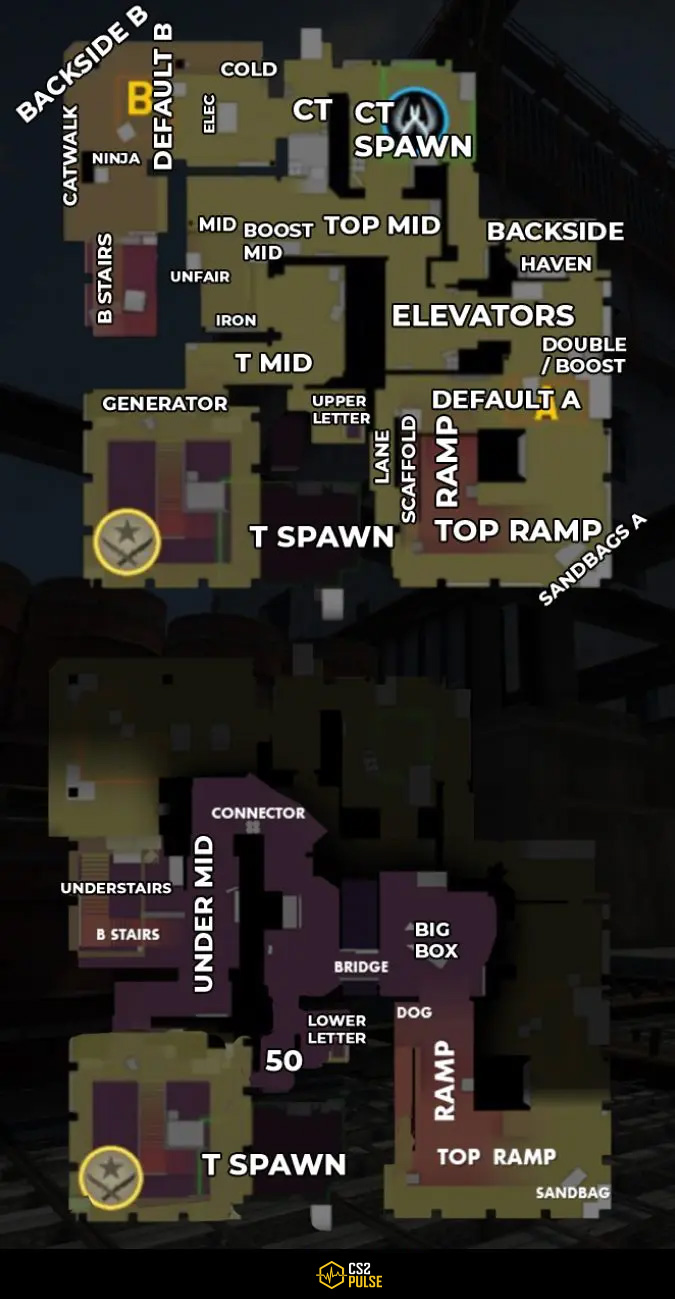
Top 5 CS2 Callouts You Need to Master for Competitive Play
When it comes to mastering competitive play in CS2, understanding map callouts is essential for team communication and strategy. Here are the Top 5 CS2 Callouts you absolutely need to master:
- A-site: Familiarize yourself with the different parts of the A-site, such as 'Ninja', 'Triple Stack', and 'A Balcony'. These callouts will help your team coordinate attacks and defenses effectively.
- B-site: Key locations like 'Back Plat', 'Site', and 'Car' are crucial for securing B-site. Communicating these spots clearly can turn the tide of battle.
- Middle: Control over middle can make or break a match. Callouts like 'Top Mid', 'Bot Mid', and 'Connector' are vital for maintaining map dominance.
- Flank Routes: Always be aware of potential flanking routes. Callouts such as 'Long A', 'Short A', and 'Banana' can inform your teammates of enemy positions.
- Utility Spots: Don't forget about callouts for critical utility spots, like 'Smoke' and 'Flash'. Knowing when and where to use these can change the game's momentum.
Counter-Strike is a team-based first-person shooter that has captivated gamers since its inception. Players can choose to be part of the terrorist or counter-terrorist team, engaging in various game modes. For those looking to enhance their experience, exploring cs2 surf commands can provide an exciting twist to gameplay.
The Ultimate Guide to Effective Communication in CS2: Callouts That Count
Effective communication plays a pivotal role in achieving success in CS2, especially in high-stakes games where every second counts. To elevate your gameplay and ensure your team remains coordinated, mastering callouts is essential. These concise messages serve as vital notifications to inform your teammates about crucial developments, such as enemy positions, weapon locations, and strategic plays. A well-timed callout can mean the difference between victory and defeat, so understanding the importance of clear and precise communication is paramount.
To establish a robust framework for success, consider implementing a structured format for your callouts. For example, utilize a simple numbered list to categorize key locations on maps:
- Bombsite A
- Bombsite B
- Mid
- Long
- Short
This method not only streamlines communication but also enhances team synergy, allowing players to easily relay information under pressure. Remember, effective communication in CS2 is not just about saying the right things; it’s about fostering an environment where every team member feels empowered to share vital information swiftly!
How to Create Memorable Callouts That Improve Team Coordination in CS2
Creating memorable callouts in CS2 is essential for enhancing team coordination and ensuring that all players are on the same page. One effective method to achieve this is by establishing a consistent vocabulary for locations and tactical movements. For instance, instead of using vague terms like 'over there' or 'to the left', designate specific callouts for different map areas, such as 'A site' or 'Mid'. This allows teammates to quickly understand and react to each other's communications, which is crucial in high-stakes moments. Additionally, using visual aids, like map references or screenshots, can reinforce these callouts in practice sessions, helping to engrain them in your team's collective memory.
Another important aspect of crafting effective callouts is their clarity and brevity. In the heat of battle, lengthy explanations can lead to confusion and missed opportunities. Aim for a balance between being descriptive yet concise; for example, instead of saying, 'There's an enemy near the window on the A site', simply use 'Enemy A site window'. Alongside verbal communication, consider integrating ping systems or quick chat prompts that serve as visual cues for your teammates. This combination of verbal callouts and digital assistance helps maintain fluid communication and allows for quicker strategic adjustments, ultimately improving your team's synergy and coordination.